The Coverage Gap: Five Insurance Clauses US Contractors Overlook in Algeria — and the Claims That Follow
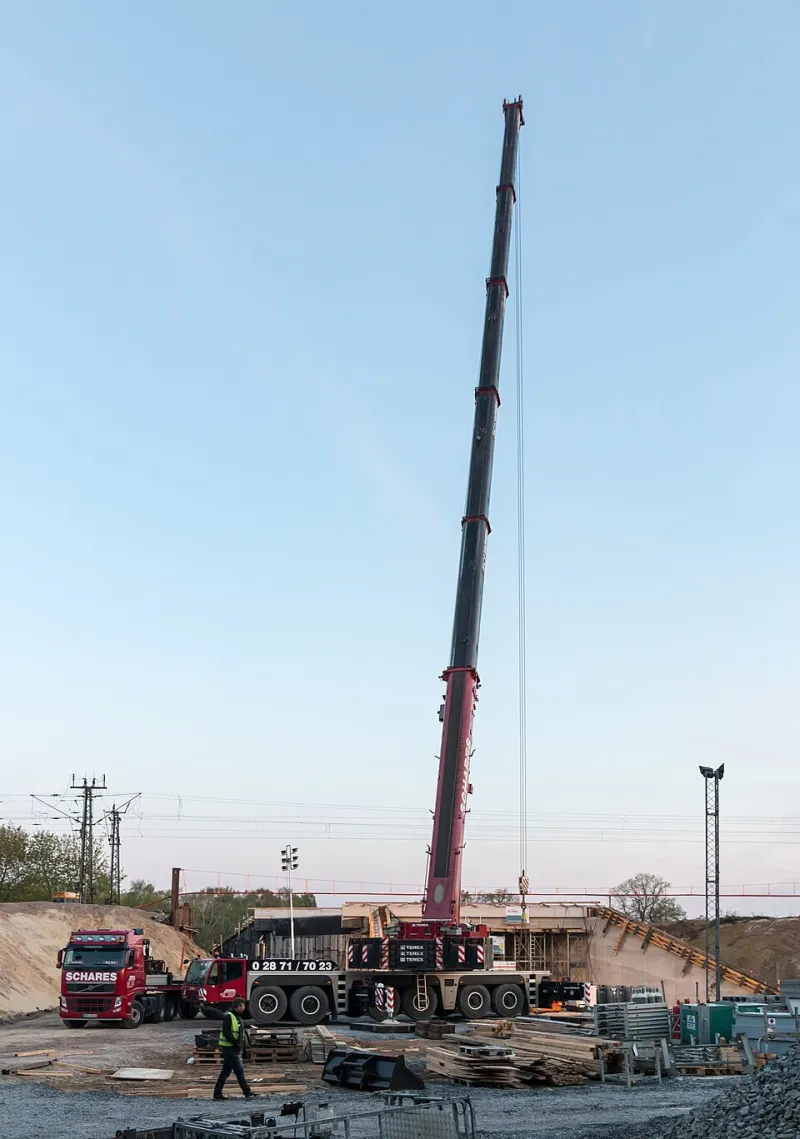
Photo: Dietmar Rabich, CC BY-SA 4.0, via Wikimedia Commons
Ask a US contractor's project team what they remember about insurance from their first Algerian tender, and the answer is usually a page of French-language requirements attached to the technical bid. Ask their risk manager six months later, after a cargo of structural steel has sat unrepaired at port and a subcontractor has filed a claim, and the answer is different.
Algerian law requires that risks located in the country be insured with locally licensed insurers. That single rule reshapes everything a US contractor knows about program structure: the master policies negotiated at headquarters cannot simply be extended to cover an Algerian site. What follows is a review of the five gaps that most often produce uninsured or underinsured losses.
Clause one: the construction all-risks policy nobody read in French
Algerian public and private works contracts typically require a construction all-risks policy covering damage to the works, third-party liability, and the contractor's liability toward the employer. The requirement is standard. The execution rarely is.
The gap appears at the boundary between languages. A policy issued in Arabic or French with a summary translation in English can carry exclusions, sub-limits, or deductibles that never surface in the English summary. Defective design exclusions, testing and commissioning carve-outs, and territorial limits that stop at the site fence all appear with some regularity. Before mobilization, obtain the full policy wording in its original language, have it translated by a professional with engineering vocabulary, and reconcile it against the risk register line by line.
Clause two: the ten-year liability that outlives the project
Algerian law imposes a decennial liability regime on builders and designers for defects that compromise the structural integrity of a building or its core systems. The exposure survives project closeout by a decade, and it attaches whether or not the contractor is still on site or still in the country.
US contractors often assume their completed-operations cover, written for a US or international program, addresses this. It does not, unless a locally admitted policy expressly responds. Confirm the local decennial policy is in place, that its limits are per-project rather than shared across a portfolio, and that the insurer's security rating is acceptable to lenders. Then confirm who pays for it across the ten-year horizon and whether the obligation is passed to subcontractors.
Clause three: the marine cargo trap in an FOB or CIF shipment
Imports into Algeria carry a local insurance requirement, and many contracts are written on terms that place the insurance obligation on the Algerian party. US suppliers frequently ship on terms that leave the coverage to the buyer and then discover, when a turbine arrives with impact damage, that the buyer's local policy has a deductible equal to the value of the damaged component.
Resolve three questions before the first shipment: who is contractually responsible for insuring the cargo, at what Incoterm, with what deductible, and at what declared value including inland transit to site. Interior transit from port to project site is a separate exposure and is routinely omitted. For oversized or high-value cargo, arrange project cargo cover with a named loss adjuster and pre-agreed survey procedure.
Clause four: delay in start-up and the advance loss of profits nobody bought
Physical damage cover protects the asset. It does not protect the revenue the owner expected the asset to generate. A delay in start-up, or advance loss of profits, extension responds when a covered physical loss pushes commissioning back and the owner loses revenue as a result.
Algerian owners are increasingly aware of this exposure, particularly on power and industrial projects with fixed offtake or supply commitments. The contractor may find that the contract imposes liquidated damages for delay while the insurance program excludes the resulting loss. Close the loop: either buy the delay cover as part of the construction policy or negotiate the liquidated damages cap with a clear understanding of what insurance will and will not fund.
Clause five: employer's liability, social security, and the medical evacuation clause
Every Algerian employer contributes to the national social security system, and that system handles workplace injury claims for locally employed staff. It does not cover expatriate personnel, third-party injuries on site, or the cost of a medical evacuation to Europe or the United States.
The gap is usually a question of limits and geography. A general liability policy with a modest limit is not adequate for a construction site with heavy equipment and public interface. Add employer's liability for expatriates, a dedicated medical evacuation and repatriation provision, and a clear protocol for incident reporting that satisfies both the local insurer and the US carrier so the two do not dispute primacy after an event.
Reinsurance, security, and the claims-ready file
Algerian insurers cede a mandatory portion of certain risks to the national reinsurance entity, and capacity above that is placed internationally. Understand where your risk sits in that tower and confirm the security behind it. If the project is financed by a development finance institution, the lender will have its own requirements about insurer ratings and policy assignment.
Claims are won or lost on documentation assembled before the loss. Build the file at mobilization: certified translations of every policy, a named local loss adjuster with contact details in the project directory, a bilingual incident-reporting template, photographic retention standards, and a claims correspondence log. Establish who has authority to notify insurers and in what timeframe, because late notification is the most common and most avoidable ground for denial.
Structuring it before mobilization
Treat insurance as a workstream with a schedule, not a procurement formality. Six to eight weeks before mobilization: confirm the local brokerage relationship, obtain original-language wordings, reconcile limits against the contract and the risk register, and map the interface between local policies and the US master program so that gaps and overlaps are identified in writing. Agree the deductible allocation with the project commercial team, since deductibles are costs that land on someone's budget.
Finally, appoint a single accountable person on the project — not at headquarters — who owns the insurance file and the claims protocol. On Algerian projects, the difference between a recovered loss and a written-off one is usually the presence of someone who read the policy before the accident.