Core Samples and Caution Flags: A 2026 Capital-Readiness Checklist for Algeria's Mining Ambitions
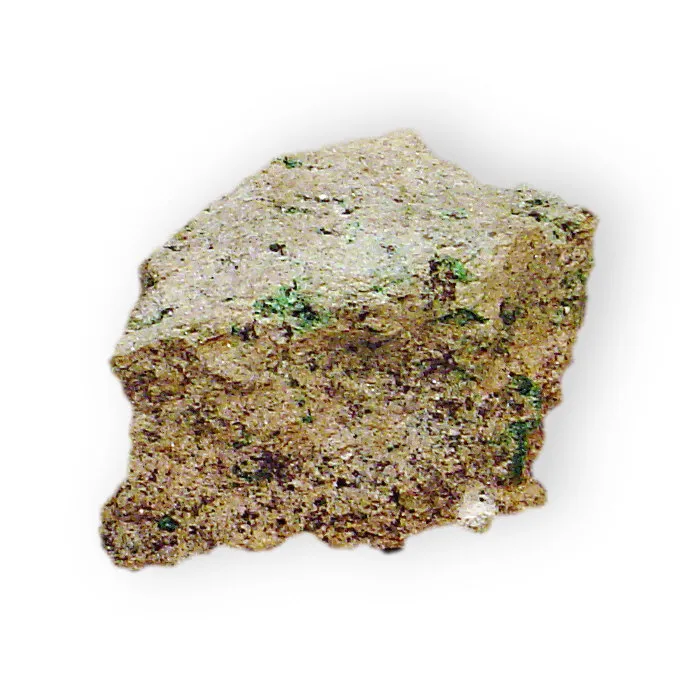
Photo: Dave Dyet http://www.shutterstone.com http://www.dyet.com, Public domain, via Wikimedia Commons
Algeria has spent the better part of a decade telling anyone who would listen that it intends to become a mining country. In 2026, that claim finally has paperwork behind it: an integrated phosphate scheme anchored in the Tebessa basin, a zinc project advancing near Bejaia, and a scattering of rare-earth and base-metal exploration permits that state agencies are actively marketing to foreign capital.
For US investors accustomed to jurisdictions where a feasibility study, a permit, and a port sit within a ninety-minute drive of one another, the Algerian file rewards patience and punishes assumptions. What follows is not a sales pitch. It is a diligence checklist — the questions to answer before a single dollar of exploration or development capital leaves the United States.
Begin with the logistics, not the grade
Geology is the easy part. Algerian deposits of phosphate rock in the Djebel Onk region are well documented and large; the zinc-lead mineralization near Tala Hamza has been studied for decades; rare-earth occurrences exist but remain early-stage, and any investor treating them as a near-term production story is selling themselves a narrative rather than a mine.
The binding constraint is movement. Phosphate from the Tebessa basin must reach processing and export infrastructure at Annaba, and the rail corridor that carries it is already shared with other bulk traffic. Ask precisely what tonnage the line can absorb, who holds the slot allocation, and what the incremental capital cost of upgrading it would be — and whether that cost lands on the operator, the state, or a shared vehicle. For the Bejaia-area zinc project, port proximity is a genuine advantage, but underground development adjacent to populated terrain brings its own permitting and resettlement complexity.
Water deserves equal scrutiny. Beneficiation and processing consume volumes that semi-arid regions cannot supply from existing networks without displacing agricultural or municipal users. If the project requires a dedicated pipeline, a desalination unit, or a captive water source, that capital expenditure belongs in the base case, not the sensitivity table.
Licensing: map the sequence before you map the orebody
Exploration titles in Algeria are administered through the national mining heritage agency, with exploitation concessions granted by decree after a technical and environmental review. The sequence runs roughly as follows: exploration permit, discovery declaration, feasibility and environmental impact study, public inquiry, conversion to an exploitation concession, and finally the investment agreements that unlock incentives.
Each stage has a failure mode. The environmental study is not a formality — it triggers a public consultation that can surface land-use objections, and it sits in a different ministry from the one that granted the exploration title. Surface rights may belong to agricultural users, forested areas, or municipalities, and each requires its own instrument. Investors who assume the concession settles all land questions discover otherwise during construction.
Engage the national investment promotion agency early enough to negotiate the incentive package in writing rather than accepting a generic regime. Tax treatment, customs exemptions on imported equipment, and the stability guarantees available under the investment framework are negotiable in practice — but only before the file is closed.
Ownership structures and the local partner question
Mining sits in the category of activities where foreign participation is scrutinized, and the practical result is that most US entrants will hold a minority position in the operating company alongside a state-owned or domestic partner. The state mining groups and their subsidiaries — Somiphos in phosphates, ENOF in non-ferrous minerals — are the natural counterparties for large-scale projects.
A local partner brings permitting fluency and political cover. It also brings governance risk. Before signing, resolve the following in the shareholders agreement: who appoints the general manager, what reserved matters require unanimity, how capital calls are funded if one party defaults, how transfer restrictions and exit rights operate, and which arbitration seat and language govern disputes. If the answer to any of these is deferred to a later document, expect it to be litigated later.
Power, reagents, and the cost of self-supply
A mine that depends on the national grid inherits the grid's reliability profile. For continuous-process operations, model a captive generation component and price the gas or diesel contract that supports it. Phosphate processing additionally requires sulfuric acid and, in some routes, ammonia — both of which imply either an import stream through Annaba or a domestic supply agreement with a chemicals producer. Confirm which, and at what price index.
Offtake: who actually buys, and in what currency
Phosphate rock and finished fertilizers compete in a market dominated by North African and Gulf producers with established customer relationships. Zinc trades against the London benchmark but is sold into a concentrates market where treatment and refining charges can erase a thin margin. Rare earths are a different problem entirely: pricing transparency is limited and downstream separation capacity sits overwhelmingly outside Algeria.
Name the offtaker before financial close. Trading houses will engage, but they will price the country risk and the logistics risk into the discount. Build the price deck at that discount, not at the benchmark.
ESG exposure is now a financing condition
US and European lenders and development finance institutions apply the IFC Performance Standards and, for tailings, the global industry standard on tailings management. That means a credible closure plan, groundwater monitoring, community grievance mechanisms, and a resettlement framework if the project footprint displaces households. Political risk insurance and development finance support are available for Algerian projects; both require documentation that is far easier to assemble before mobilization than after.
Ten questions before wiring the deposit
- What tonnage can the rail corridor and port actually allocate to this project, in writing?
- Who funds the water solution, and is it permitted?
- Which ministry signs which permit, and in what order?
- Is the concession secured, or only the exploration title?
- What is the governance balance in the joint venture, and who breaks a deadlock?
- What is the sulfuric acid or reagent supply route and price basis?
- Who is the named offtaker, and what discount have they applied?
- What is the realistic grid reliability assumption, and what does backup power cost?
- Has the tailings design been reviewed against the global standard?
- Which currency does revenue arrive in, and how does it leave?
The verdict
Algeria's mining story in 2026 is credible but conditional. The deposits are real, the political will is real, and the incentives are more tangible than they were five years ago. What remains unresolved is the connective tissue — rail, water, reagents, power, and offtake — and that tissue is where projects succeed or stall. US investors who underwrite the infrastructure with the same rigor they apply to the resource will find a market that rewards preparation.