Two Million Square Miles of Sunlight: Inside Algeria's Race to Turn the Sahara Into a Solar Powerhouse
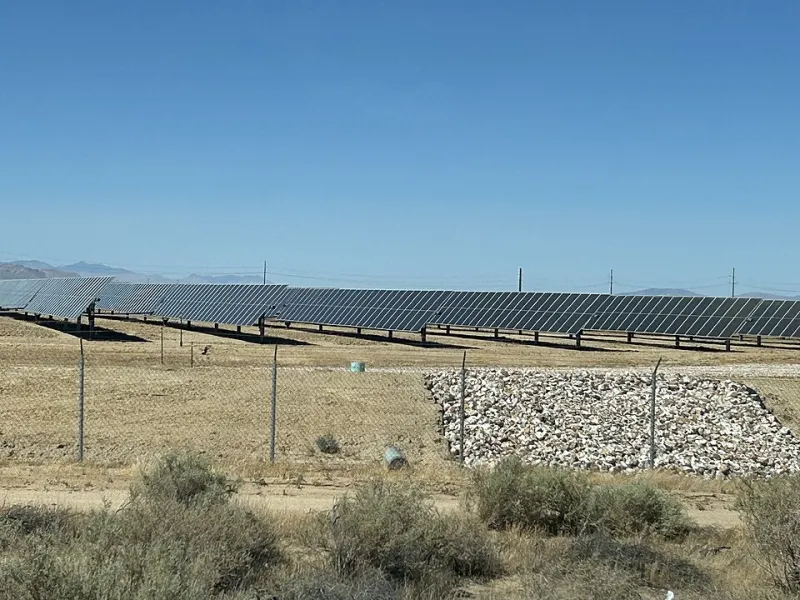
Photo: TheUltimateGrass, CC0, via Wikimedia Commons
Algeria holds one of the planet's most generous solar endowments. The Saharan interior receives some of the highest and most consistent solar irradiance on Earth, and the Algerian government has committed to converting that resource into gigawatts of installed generation capacity. For American clean energy companies scanning the globe for scale, the question is no longer whether Algeria's solar market will materialize. It is who will be positioned to serve it when it does.
The Scale of the Commitment
Algeria's national renewable energy program targets roughly 15,000 megawatts of solar capacity over the long term, with interim tranches already moving through the tender pipeline. The state utility, Sonelgaz, has issued successive requests for proposals covering utility-scale photovoltaic plants across the country's southern regions — locations such as Adrar, Tamanrasset, and Ouargla, where land is abundant, population density is minimal, and sunlight is essentially a constant.
The strategic logic is straightforward. Algeria's economy remains tethered to natural gas exports, and every kilowatt-hour generated domestically by the sun is gas available for sale to Europe at premium prices. That fiscal incentive gives the solar program a durability that pure environmental mandates often lack. It also explains why the program survived successive ministerial reshuffles and budget cycles.
Where US Companies Fit Into the Equation
The opportunity for American firms spans three distinct layers of the value chain.
Project development and EPC. Algeria's tenders typically require local partnership structures, and foreign developers with proven utility-scale track records are scarce in the market. US firms that arrive with financing relationships, engineering credibility, and patience for the permitting process can differentiate themselves against competitors whose bids are built primarily on low cost.
Equipment supply. Algeria currently imports the overwhelming majority of its photovoltaic modules, inverters, mounting systems, and transformers. The government has signaled a preference for localized assembly over time, which means early-arriving equipment suppliers — particularly those willing to license technology or establish joint-venture manufacturing — may capture preference in future tenders.
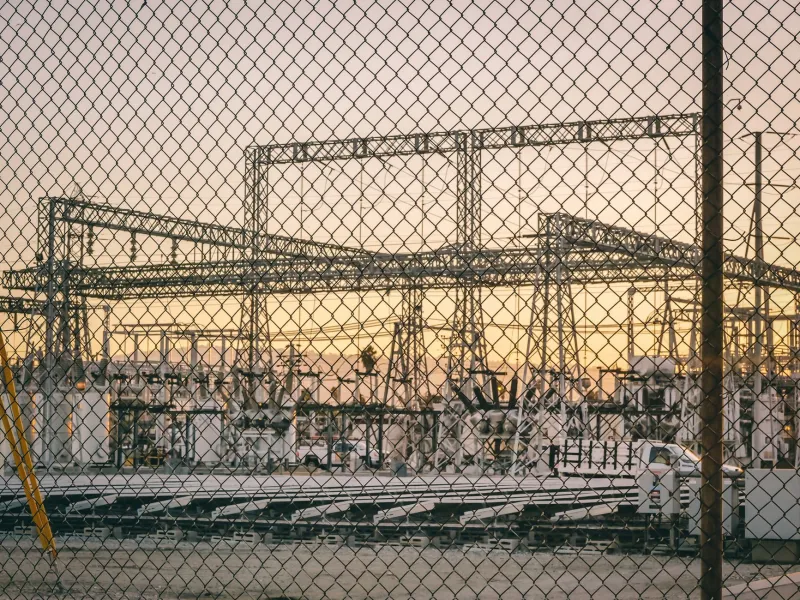
Grid technology. Connecting remote Saharan plants to northern demand centers requires high-voltage transmission, smart grid software, and storage integration. This is an area where American firms hold genuine technical advantages, and it is the layer of the market that receives the least attention in conventional market-entry analyses.
The Competitive Field
Chinese suppliers currently dominate the low-cost end of Algeria's solar procurement, while European firms — particularly those with ties to former colonial commercial networks — maintain strong institutional relationships. Neither, however, has fully solved the local content equation, and both face headwinds as Algeria pushes for technology transfer and domestic job creation.
US companies entering now should not attempt to compete solely on price. The winning posture is to lead with bankability: project finance structures, engineering standards, and long-term service commitments that Algerian counterparties cannot easily source elsewhere.
Practical Steps for a Serious Entry
- Register early with the relevant ministries. The Ministry of Energy and Sonelgaz maintain vendor and investor registries; visibility at the pre-tender stage shapes who gets invited to bid.
- Vet local partners with the same rigor as a merger. The 51/49 rule applies to strategic sectors, meaning Algerian partners will hold majority stakes. Governance terms matter more than headline ownership percentages.
- Plan for the desert. Heat derating, dust management, and logistics across vast distances are not footnotes — they are the engineering core of any credible Saharan bid.
- Understand the currency dimension. Dinar conversion and repatriation rules affect every return calculation. Model conservatively and structure payments accordingly.
A Market That Rewards Early Movers
Algeria's solar program has been announced, delayed, and re-announced often enough that skeptics have learned to wait. That skepticism is precisely what creates the opening. The firms that commit early — building relationships, registering entities, and quietly positioning equipment and expertise — will find themselves at the front of the queue when the tenders reach full velocity. The Sahara has waited a long time to become an energy hub. It will not wait for latecomers.