Face Time Is Not Optional: Why American Companies That Skip Algeria Trips Are Losing Deals They Never Knew They Had
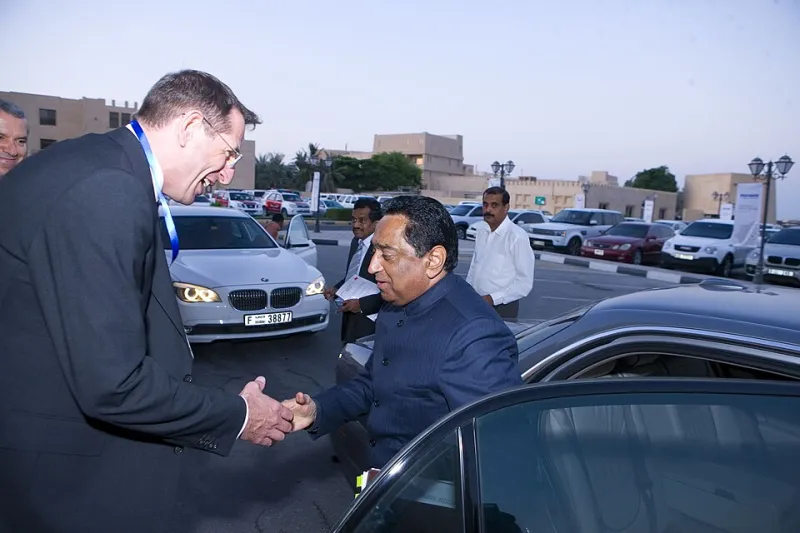
Photo: Richter Frank-Jurgen, CC BY-SA 2.0, via Wikimedia Commons
There is a particular kind of business failure that never shows up on a post-mortem report. No contract is voided. No legal dispute is filed. The Algerian counterpart simply stops responding — emails go unanswered, phone calls are politely deflected, and the deal that once seemed promising dissolves without explanation. For dozens of American companies that have attempted to enter the Algerian market remotely, this is not an anomaly. It is the predictable consequence of misreading how commerce actually functions in North Africa's largest economy.
Algeria operates on a relationship economy. Before any serious business can be transacted, trust must be established — and in the Algerian context, trust is not something that can be transmitted over a fiber-optic cable. It is built through shared meals, extended conversations, and the physical act of showing up. American executives accustomed to closing six-figure deals via video conference often arrive at the Algerian market with an efficiency mindset that the culture reads as indifference.
The Cultural Architecture Behind In-Person Commerce
To understand why remote-first approaches fail so consistently in Algeria, it helps to understand what an in-person meeting actually signals to an Algerian business partner. Traveling to Algiers — navigating the visa process, absorbing the time zone difference, committing days rather than hours — communicates something no pitch deck can replicate: that you consider this relationship worth the investment.
Algerian business culture places significant weight on what might be called relational due diligence. Before a supplier, distributor, or government counterpart will commit to a serious commercial arrangement, they want to assess the person behind the proposal. Character, reliability, and long-term intention are evaluated through extended interaction. A 45-minute video call, however polished, provides almost none of the interpersonal data that Algerian decision-makers are looking for.
This is not a generational quirk that will fade as younger professionals enter the workforce. It is a structural feature of how business risk is managed in a market where formal legal enforcement mechanisms remain underdeveloped and reputational accountability carries disproportionate weight.
The Sectors Where Remote Engagement Is Most Dangerous
Not every industry punishes virtual relationship-building equally. American companies should be particularly cautious in sectors where the counterpart relationship is the primary asset.
Distribution and logistics partnerships are perhaps the highest-risk category. Algerian distributors who move goods across the country's vast geography are frequently family-operated enterprises with deep regional ties. These businesses extend credit, manage customs relationships, and absorb operational risk on behalf of their foreign partners. Asking such a partner to take on that exposure for a company they have never met in person is, from their perspective, an unreasonable request — and most will simply wait for a competitor who makes the trip.
Construction and infrastructure supply chains represent another vulnerable category. Algeria's ongoing investment in public infrastructure has created substantial demand for American-manufactured equipment and materials. But procurement decisions in this space are rarely transactional. They involve extended negotiation, technical evaluation, and the kind of trust-building that happens over dinners in Algiers or Oran, not over shared screens.
Financial services and fintech partnerships are similarly exposed. Algerian banks and payment processors operate in a heavily regulated, relationship-driven environment. A US fintech company seeking a local banking partner through cold outreach and digital communication is unlikely to advance beyond the initial courtesy response.
Two Cases That Illustrate the Cost of Getting This Wrong
Consider the experience of a mid-sized American manufacturer of industrial safety equipment that identified a promising Algerian distribution opportunity in 2022. The company's business development team conducted three video calls with a prospective partner in Annaba, exchanged detailed product documentation, and believed the relationship was progressing well. When they sent a formal distribution agreement for review, the Algerian firm went silent. A subsequent inquiry through a local consultant revealed that the Annaba company had signed with a European competitor whose representative had visited twice in the preceding six months.
A second case involves a US agricultural input supplier that attempted to establish a sales presence in western Algeria through a combination of WhatsApp communication and occasional video calls. The company's remote team invested nearly eight months in the relationship before a local advisor informed them that their Algerian contact had been managing parallel conversations with three other foreign suppliers simultaneously — a hedging strategy that would have been far less viable had the American company established a credible in-person presence early in the process.
When Virtual Engagement Actually Works
It would be an overstatement to argue that digital communication has no role in Algerian business development. The more accurate claim is that virtual tools function effectively as maintenance mechanisms for relationships that have already been established in person — not as substitutes for the foundational meeting.
There are narrow exceptions. Technical sectors where the product or service speaks for itself — software licensing, standardized commodity procurement, or post-sale technical support — can sustain meaningful engagement at a distance once the initial commercial framework is in place. Similarly, Algerian entrepreneurs who have spent significant time abroad, particularly those educated in North America or France, may be more comfortable with remote-first communication styles. Researching your specific counterpart's background before defaulting to a digital engagement strategy is always worth the effort.
A Decision Framework for US Companies
Before committing to a fully remote engagement strategy, American companies should run through a straightforward assessment.
First, evaluate the size and duration of the commercial relationship you are pursuing. A one-time export transaction may not justify transatlantic travel. A multi-year distribution partnership almost certainly does.
Second, consider who holds the decision-making authority on the Algerian side. Senior business owners and government-adjacent procurement officials almost universally expect in-person engagement at some stage. Mid-level managers within larger organizations may have more flexibility.
Third, assess your competitive environment. If European competitors — French, Italian, and Spanish firms in particular — are actively visiting the market, a remote-only US company is not competing on equal terms, regardless of product quality or price.
Finally, consider the cost of failure. The expense of a properly planned market visit to Algeria — including visa processing, accommodation, and local advisory support — typically ranges from $5,000 to $15,000 for a small team. That figure is modest relative to the value of a distribution agreement or supply contract that could run into the millions. The question is not whether you can afford to go. It is whether you can afford not to.
The Practical Calculus
Algeria is not a market that rewards impatience or efficiency-driven shortcuts. For American companies accustomed to a business culture that prizes speed and scalability, this requires a genuine adjustment in how market entry is planned and resourced. The companies that are building durable commercial relationships in Algeria are, almost without exception, the ones that treated the initial trip as a non-negotiable line item rather than an optional upgrade.
The video call has its place. But in Algeria, it is not at the beginning of the story.