Timing Is Everything: Why Algeria's Seasonal Business Calendar Can Make or Break Your Market Strategy
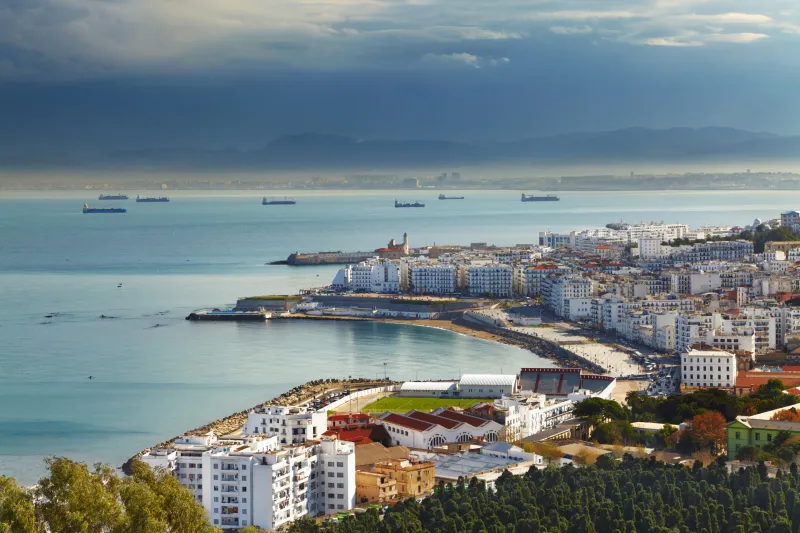
Photo: Algeria market calendar business planning seasonal strategy, via travelermaster.com
American companies entering Algeria often arrive with a plan built on spreadsheets, market research, and competitive analysis. What those plans rarely account for is time itself—specifically, the way Algeria's business environment contracts, expands, and redirects its energy according to a seasonal rhythm that has little in common with the fiscal quarters driving decisions back in the United States.
The cost of that blind spot is not always visible on a single invoice. It accumulates quietly: a shipment that arrives during a period of reduced port activity, a partnership negotiation that stalls because a key counterpart is observing a religious holiday, a product launch timed to a moment when consumer attention has shifted entirely. By the time the pattern becomes apparent, the damage is already priced in.
Ramadan: The Month That Reshapes Everything
No seasonal factor shapes Algerian commercial life more profoundly than Ramadan. For American executives accustomed to treating religious holidays as brief interruptions to normal business, the scale of Ramadan's effect can be disorienting.
During the holy month, office hours are officially shortened across much of the public and private sector. Decision-making slows considerably as employees manage fasting schedules alongside professional responsibilities. Meetings are harder to schedule, response times extend, and the informal relationship-building that underpins most Algerian business dealings essentially pauses.
At the same time, certain consumer categories experience a dramatic surge. Food imports, packaged goods, hospitality supplies, and retail inventory all move at an accelerated pace in the weeks leading up to Ramadan. US exporters who position their shipments to arrive before the month begins—rather than during it—capture demand that their competitors, who time deliveries on a standard Western logistics calendar, routinely miss.
The practical implication is straightforward: any US company with an active Algerian commercial relationship should track the Islamic lunar calendar and build Ramadan into its annual planning cycle as a primary variable, not a footnote.
The Agricultural Pulse and Its Downstream Effects
Algeria's economy remains significantly tied to its agricultural base, particularly in the interior regions where American investors focused on urban Algiers rarely venture. Wheat harvests in the high plains, date production in the south, and olive cultivation across the northern highlands each trigger regional economic cycles that ripple outward into transport, labor availability, retail spending, and industrial purchasing.
For US companies supplying agricultural inputs, processing equipment, or logistics services, these cycles define the commercial calendar far more precisely than any government-issued business guide. A supplier of irrigation technology that schedules its in-country sales visits during the post-harvest period—when Algerian farm operators are reviewing capital expenditures for the coming season—will consistently outperform a competitor that arrives during the planting rush, when every stakeholder is too operationally consumed to engage in procurement conversations.
The same logic applies to downstream buyers. American food importers sourcing Algerian products need to understand when domestic supply peaks, when export availability opens, and when competing buyers—primarily from Europe and the Gulf—are most actively locking in contracts. Entering those negotiations at the wrong moment means paying a premium that a better-timed approach would have avoided entirely.
Summer's Quiet and the Back-to-Business Window
July and August in Algeria present a dynamic that surprises many American visitors. While summer in the United States is often associated with a slower business pace, Algeria's coastal cities experience a social acceleration—families return from abroad, social calendars fill, and informal commercial activity increases. Formal institutional business, however, frequently decelerates as government ministries and large enterprises operate at reduced capacity.
September and October represent what experienced operators in the market call the "back-to-business window." Decision-makers return from summer commitments, budgets for the coming fiscal year begin to take shape, and appetite for new partnerships and procurement agreements is at its highest. US companies that have spent the summer months building relationships and preparing proposals are positioned to close deals during this window. Those who begin their outreach in September from scratch are already behind.
National Holidays and Administrative Rhythms
Beyond religious observances and agricultural cycles, Algeria's national holiday calendar introduces additional friction points that American companies frequently underestimate. Independence Day in July, Revolution Day in November, and a series of other commemorative dates create gaps in administrative processing that can delay customs clearances, contract registrations, and banking transactions by days or weeks.
For US exporters operating on tight delivery commitments, these gaps translate directly into penalties, strained relationships, and reputational damage with Algerian partners who may not fully appreciate that the delay originated on the American side. Building administrative buffer into shipping timelines around Algerian national holidays is not excessive caution—it is basic operational competence for anyone serious about the market.
Regional Variation Compounds the Complexity
Algeria is not a monolithic market, and its seasonal dynamics are not uniform across regions. The commercial calendar in Oran, shaped by its Mediterranean trade orientation, differs from the rhythms of Annaba's industrial east or the distinct seasonal patterns of the Saharan south, where energy sector activity and extreme summer temperatures create their own operational cycles.
US companies that treat Algeria as a single market and apply one seasonal strategy across all regions will find themselves perpetually misaligned somewhere. The more sophisticated approach involves mapping seasonal variables by region and by sector, then building a commercial calendar that reflects genuine on-the-ground conditions rather than a generalized impression of North African business culture.
Converting Calendar Intelligence into Competitive Advantage
The companies that consistently outperform in Algeria are not necessarily those with the largest budgets or the most sophisticated products. They are the ones that have invested the time to understand when Algeria is ready to buy, when it is ready to negotiate, and when it simply needs to be left alone to observe its own rhythms.
Practically, this means embedding Algerian calendar intelligence into inventory planning so that stock arrives when demand is building, not when it has peaked. It means scheduling executive visits during windows when counterparts are genuinely available and motivated to engage. It means structuring payment terms and delivery milestones around the realities of Algerian administrative processing, not the assumptions of a US-based logistics team.
For American entrepreneurs and investors who have already committed to Algeria—or who are evaluating that commitment now—the seasonal calendar is not a soft cultural consideration. It is a hard financial variable with measurable impact on margins, conversion rates, and the pace at which relationships mature into revenue.
The businesses that learn to read that calendar before they need it will find Algeria considerably more rewarding than those who discover it only after the first expensive miscalculation.