Trust Before Transactions: Rethinking How American Businesses Build Partnerships in Algeria
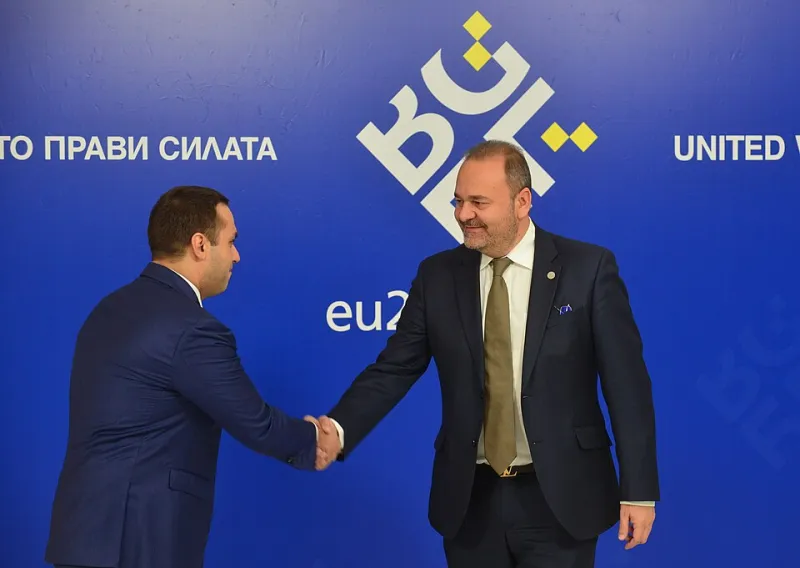
Photo: EU2018BG Bulgarian Presidency, CC BY 2.0, via Wikimedia Commons
There is a meeting that many American executives never forget. They fly into Algiers, armed with a polished deck, a tight agenda, and a return ticket booked for Thursday. Their Algerian counterpart welcomes them warmly, orders coffee, asks about the flight, inquires about family, and then — with all the time in the world — begins talking about anything except the deal on the table.
For the American, this feels like friction. For the Algerian, it is the deal.
Understanding that distinction is not a soft-skills exercise. It is a market entry requirement.
Why Relationship Capital Is Algeria's Real Currency
Algeria's commercial culture is rooted in collectivist values shaped by decades of post-independence institution-building, a large public sector, and tight-knit family and regional networks. Business decisions — particularly those involving foreign partners — are rarely made in isolation. They are filtered through webs of personal trust, community reputation, and long-standing loyalty.
This is not unique to Algeria. Much of the Middle East, North Africa, and the broader Arab world operates on similar principles. But what distinguishes Algeria is the degree to which institutional channels remain underdeveloped compared to relationship channels. In markets where regulatory frameworks shift frequently and bureaucratic processes can be opaque, knowing the right person — and more importantly, being known as a trustworthy one — substitutes for the structural certainty that American executives typically rely on.
The implication is direct: a Algerian business partner is not simply evaluating your product or your price. They are evaluating you — your character, your patience, your respect for their culture, and your willingness to invest time before extracting value.
The Failure Mode American Companies Keep Repeating
Consider the pattern that emerges across industries. A US-based industrial equipment distributor identifies a promising Algerian importer through a trade directory. Initial emails are exchanged. A video call is scheduled. The American side presents pricing, lead times, and warranty terms. The Algerian side responds politely but noncommittally. Follow-up emails go unanswered. The deal quietly dies.
The American company interprets this as a lack of interest. In many cases, it reflects something different: a relationship that was never built.
Contrast this with the approach taken by a mid-sized US agricultural technology firm that entered the Algerian market through a multi-year process. Their regional manager made four trips to Algeria before a single purchase order was signed. He attended industry events in Algiers, accepted dinner invitations, met the families of key contacts, and commissioned an Arabic translation of their core product documentation without being asked. When the contract finally came, it came with introductions to three additional buyers — relationships his counterpart had quietly been cultivating on the American firm's behalf.
The difference was not product quality. Both companies had competitive offerings. The difference was the willingness to treat relationship-building as a legitimate business investment rather than a procedural inconvenience.
Practical Strategies for American Managers
Extend your timeline — deliberately. If your internal planning assumes a six-month market entry, build in an additional two to three quarters for relationship development before meaningful commercial activity begins. This is not lost time. It is infrastructure.
Send the same people, repeatedly. Consistency of personnel signals commitment. Rotating representatives — common in US corporate structures where account management shifts frequently — communicates instability to Algerian partners who have just begun to trust the face across the table. Wherever possible, designate a single relationship owner for each key Algerian counterpart and protect that assignment.
Accept hospitality without transactional intent. When an Algerian host invites you to lunch, to their home, or to a social gathering, attend. Do not use the occasion to advance the agenda. The relationship is the agenda. Americans who treat every interaction as an opportunity to move a deal forward often come across as calculating — a perception that can permanently damage trust.
Learn the cultural calendar. Ramadan restructures the Algerian business day significantly. Friday is the day of congregational prayer. Scheduling high-stakes meetings or pressing for decisions during these periods signals cultural indifference. Acknowledging them — and adjusting accordingly — signals the opposite.
Invest in Arabic or Darija, even symbolically. Fluency is not the goal. Learning a handful of greetings, expressions of respect, or pleasantries in Algerian Arabic communicates effort. It tells your counterpart that you see them as a full person, not merely a transaction node.
Balancing Relationship Investment with Operational Efficiency
None of this means American companies must abandon their operational discipline. The goal is calibration, not capitulation.
Effective American operators in Algeria typically run a dual-track approach. Internally, they maintain their standard project timelines, milestones, and accountability structures. Externally, they allow the relationship layer to breathe — resisting the impulse to accelerate local partners toward American-paced decision cycles.
This requires clear communication upward within the US organization. Executives managing Algerian operations often find themselves explaining to home-office leadership why a deal that looked imminent six months ago has not yet closed. The companies that succeed in Algeria are those whose leadership understands relationship development as a recognized line item — not a red flag.
Some firms formalize this by designating a "relationship development" phase in their market entry plans, with its own budget, personnel allocation, and success metrics (number of senior contacts established, events attended, site visits completed) distinct from commercial conversion metrics.
When Relationships Become Competitive Moats
Here is the strategic upside that purely transactional thinking misses: in Algeria, a relationship well-built is extraordinarily difficult for a competitor to displace.
Algerian business culture places high value on loyalty and continuity. A partner who has invested in the relationship over years — who has shown up, shared meals, navigated difficulties with patience, and demonstrated respect — is not easily replaced by a competitor offering a marginally better price. The switching cost is social and reputational, not merely financial.
American companies that internalize this dynamic stop viewing relationship investment as a cost and start viewing it as a barrier to entry they are constructing on their own behalf.
The Takeaway for US Executives
Algeria is not a market that rewards the fastest pitch. It rewards the most patient presence. American companies that arrive expecting to close deals on the first visit will consistently underperform against those willing to invest in the slower, richer process of becoming genuinely known and trusted.
The handshake, in Algeria, is not a formality at the end of a negotiation. It is the beginning of one. And everything that happens before it — the coffees, the dinners, the unhurried conversations — is the work.
For US businesses serious about Algeria, that work is not optional. It is the strategy.